




How to Write a Medical Literature Review: A Step-by-Step Method

A medical literature review is not a summary of every paper you can find. It is an organised answer to a focused question, built from the best available evidence. Students who struggle usually start searching before they know what they are looking for. This guide follows the order that actually works for a medical literature review, whether it is a course assignment or the first chapter of a research project.
In this guide
- 1. Turn your topic into a focused question
- 2. Choose the right type of medical literature review
- 3. Search the right databases and document everything
- 4. Screen and select studies with clear criteria
- 5. Appraise the quality of each study
- 6. Synthesise by theme, not paper by paper
- 7. Write the medical literature review, then revise
- Common mistakes in a medical literature review
- Medical literature review checklist before you submit
- Frequently asked questions
1. Turn your topic into a focused question
“Diabetes management” is a topic. “In adults with type 2 diabetes, does structured nurse-led education improve glycaemic control compared with usual care?” is a question you can review.
For clinical questions, the PICO structure helps: Population, Intervention, Comparison, Outcome. Each element later becomes a block of search terms.
2. Choose the right type of medical literature review
| Review type | What it does | Typical use |
|---|---|---|
| Narrative review | Summarises and discusses literature on a topic, with a flexible method | Course essays, background chapters |
| Scoping review | Maps what research exists on a broad question | Identifying gaps before a project |
| Systematic review | Answers a precise question with a pre-defined, reproducible method | Research projects, publication |
Check what your assignment requires. A course essay rarely needs a full systematic method, but it still benefits from a transparent search.
3. Search the right databases and document everything
- PubMed/MEDLINE for biomedical literature.
- CINAHL for nursing and allied health.
- Embase and the Cochrane Library when your institution provides access.
Combine synonyms within each PICO block with OR, and link blocks with AND. Record the databases, the date of each search, the exact search strings and the number of results. This record is what makes your review credible, and your supervisor will ask for it.
Use a reference manager such as Zotero, EndNote or Mendeley from the first day. Rebuilding a reference list by hand at the end is a common and avoidable source of errors.
4. Screen and select studies with clear criteria
Write your inclusion and exclusion criteria before screening: population, study design, language, publication dates. Screen titles and abstracts first, then full texts. For systematic reviews, the PRISMA statement provides the standard reporting checklist and flow diagram.
5. Appraise the quality of each study
Not all evidence carries the same weight. For each included study, note its design, sample size, main limitations and risk of bias. Structured appraisal checklists exist for each study type; use the one recommended by your course. Two textbooks explain appraisal clearly for students: Essentials of Nursing Research: Appraising Evidence for Nursing Practice, 10th Edition and Resource Manual for Nursing Research, 10th Edition.
6. Synthesise by theme, not paper by paper
The most common weakness in student reviews is a chain of summaries: “Smith found… Jones found…”. Instead, build an evidence table (study, design, population, findings, limitations), then group the findings by theme. For each theme, explain where studies agree, where they disagree, and why the quality of the evidence might explain the difference.
7. Write the medical literature review, then revise
A clear structure: introduction and question, methods (search and selection), results organised by theme, discussion (strength of evidence, gaps, implications for practice) and conclusion. In revision, check that every paragraph supports your answer to the question. For help with academic style, Writing Literature Reviews and Writing for Nursing and Midwifery Students are practical guides.
Common mistakes in a medical literature review
Supervisors see the same problems again and again. Avoid these and your medical literature review will already stand out:
- A question that is too broad: hundreds of results and no clear answer.
- An undocumented search: nobody, including you, can reproduce it.
- Description without appraisal: every study treated as equally reliable.
- Paper-by-paper summaries: no synthesis, no argument.
- Conclusions stronger than the evidence: a few small studies cannot prove a practice change.
Medical literature review checklist before you submit
- Is the question focused and stated in the introduction?
- Is the search reproducible (databases, dates, terms)?
- Are inclusion criteria explicit?
- Is quality appraised, not just reported?
- Are findings synthesised by theme?
- Do the conclusions match the strength of the evidence?
Frequently asked questions
How many studies should a literature review include?
There is no fixed number. It depends on the question and the evidence available. A focused question with clear criteria matters more than a high count.
Can I include reviews in my literature review?
Yes, especially for background, but prioritise primary studies when answering your question, and avoid counting the same evidence twice.
Which book helps nursing students most with research?
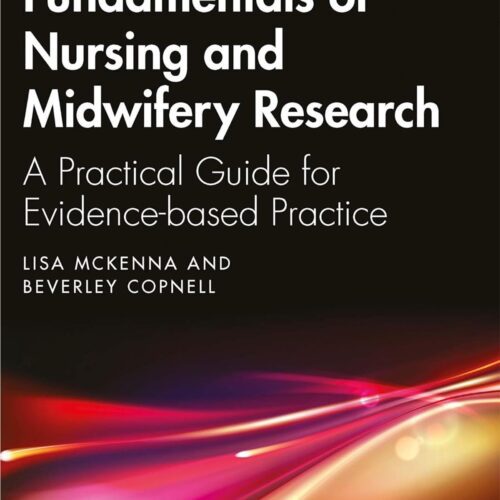
A research methods textbook that covers appraisal, such as Fundamentals of Nursing and Midwifery Research, 2nd Edition. See also our overview of nursing textbooks for students.