


Cardiology Board Review: How to Build a Study Plan That Works

Cardiology board review often fails for a predictable reason: candidates spend months reading what they already know and too little time on the topics that actually cost them points. A good study plan fixes that by starting from the exam blueprint and letting your question results decide what you read next.
In this guide
- Start from the official blueprint, not from a book
- Choose three cardiology board review resources and stick to them
- The weekly cycle: questions first, then targeted reading
- A realistic 16-week cardiology board review timeline
- Preparing for interventional cardiology boards
- Common cardiology board review mistakes
- Frequently asked questions
Start from the official blueprint, not from a book
Every certifying board publishes a content outline showing which areas are tested and in what proportion. In the United States, the American Board of Internal Medicine publishes the blueprint for its Cardiovascular Disease certification exam on the official ABIM website. Print it, and use it as the master checklist for your preparation.
For each blueprint area, mark yourself as strong, uncertain or weak. Your reading time should go mostly to the last two columns.
Choose three cardiology board review resources and stick to them
Switching between too many books is one of the most common causes of unfinished preparation. Pick one resource in each of these roles:
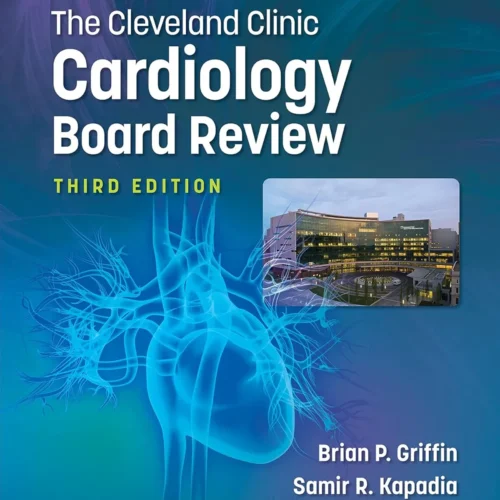
- A board-focused review text to cover the blueprint efficiently: The Cleveland Clinic Cardiology Board Review is written specifically for this purpose.
- A concise textbook for topics where you need more explanation: Mayo Clinic Cardiology: Concise Textbook, 4th Edition or Current Diagnosis & Treatment: Cardiology, 6th Edition.
- A question source to measure progress. Use a question bank or practice questions that reflect the official exam format.
For visual learners, Netter’s Cardiology, 3rd Edition is a useful complement for anatomy, imaging correlates and pathophysiology.
The weekly cycle: questions first, then targeted reading
A plan that survives clinical work is built on a short, repeatable weekly cycle:
- Monday: a timed block of mixed questions.
- Tuesday to Thursday: read only the topics you missed, in your review text. Write one short note per error: what you chose, why it was wrong, and the rule that gives the right answer.
- Friday: a short block on the same weak topics to confirm the correction.
- Weekend: review your error notes and update your strong/uncertain/weak list.
This cycle turns every wrong answer into a reading assignment. It is far more efficient than reading the review book in page order. Our guide to active recall explains why answering before reading improves retention.
A realistic 16-week cardiology board review timeline
| Weeks | Focus | Output |
|---|---|---|
| 1–2 | Blueprint self-assessment, baseline question block | Strong / uncertain / weak list |
| 3–10 | Weekly cycle on weak and uncertain areas | Error notebook, improving block scores |
| 11–14 | Mixed timed blocks across the full blueprint | Stable scores in every area |
| 15–16 | Error notebook review, light reading, rest | Confidence and stamina |
Adjust the length to your schedule. The principle stays the same: diagnose first, read second, re-test third.
Preparing for interventional cardiology boards
Interventional cardiology has its own examination and its own resources. Two question-based titles are built for it: the SCAI Interventional Cardiology Review, 3rd Edition and 1133 Questions: An Interventional Cardiology Board Review, 3rd Edition. For in-depth reading around procedures, Textbook of Interventional Cardiology, 8th Edition is the reference, and Invasive Cardiology: A Manual for Cath Lab Personnel covers the practical side of the cath lab.
Common cardiology board review mistakes
- Reading without testing. Familiarity feels like knowledge until the exam.
- Using an old edition. Guidelines in cardiology change often; check that your review material reflects current recommendations.
- Treating commercial questions as predictions. They train reasoning; only the official blueprint defines scope.
- Skipping rest in the final week. Stamina matters on a long exam day.
Frequently asked questions
How long should cardiology board preparation take?
Many candidates plan three to six months alongside clinical work. The right length depends on your baseline: start with a question block, then decide.
Is one review book enough?
One review book plus a question source is enough for most candidates, provided you read around every question you miss. Add a concise textbook only for topics the review book explains too briefly.
Where can I find the books mentioned here?
All titles linked in this guide are available in our medical eBook catalogue, with an online preview before purchase. Before buying any digital textbook, check the points in our guide on how to choose medical eBooks.
This article is for educational guidance only and does not replace official exam information. See our medical disclaimer.