

Best Anesthesiology Books for Residents: What to Read at Each Stage

Choosing anesthesiology books for residents is harder than it looks. Most new residents make the same mistake: they buy the biggest reference on the shelf and try to read it cover to cover. Three weeks later, the book is closed, the call schedule has taken over, and nothing has been learned in a structured way.
A better approach is to build a small, layered library: one core text you actually finish, one reference you consult around cases, and one question-based resource for exam preparation. This guide shows which anesthesiology books fit each layer and when to use them.
In this guide
- The best anesthesiology books for residents: the short answer
- Core texts: the book you should actually finish
- Comprehensive references: read around the case, not from page one
- Case-based books: learning to think like a consultant
- Question-based review books: for the exams
- Subspecialty rotations
- Comparison table: anesthesiology books for residents
- Before you buy: check the edition and the format
- Frequently asked questions
The best anesthesiology books for residents: the short answer
- First months of residency: a readable core text such as Miller’s Basics of Anesthesia, 8th Edition or Morgan & Mikhail’s Clinical Anesthesiology, 7th Edition.
- Looking things up around cases: a comprehensive reference such as Barash, Cullen and Stoelting’s Clinical Anesthesia, 9th Edition or Miller’s Anesthesia, 10th Edition.
- Exam preparation: question-and-answer books such as Anesthesia: A Comprehensive Review, 6th Edition and Anesthesia Secrets, 6th Edition.
Core texts: the book you should actually finish
A core text gives you the framework: pharmacology of anesthetic agents, airway management, monitoring, regional techniques and the physiology behind them. Its value comes from being read completely, so readability matters more than exhaustiveness.
Morgan & Mikhail’s Clinical Anesthesiology is the classic choice for this role: it covers the whole specialty in a single volume with a clinical, practical tone. Miller’s Basics of Anesthesia plays the same role and is a natural bridge if you later move to the full Miller’s reference.
How to use it: read the chapter that matches your current rotation or tomorrow’s list, not the book in page order. A resident starting obstetric anesthesia gets far more from the obstetric chapter tonight than from chapter one.
Comprehensive references: read around the case, not from page one
Large references are designed to answer precise questions in depth. They are excellent when you have a specific case in front of you and poor as a first read.
- Miller’s Anesthesia (2-volume set, 10th Edition) and Barash’s Clinical Anesthesia are the two broad references residents consult most.
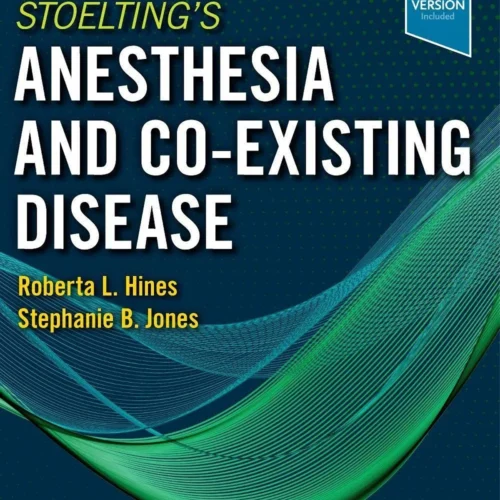
- Stoelting’s Anesthesia and Co-Existing Disease, 8th Edition answers a different question: how does this patient’s disease change my anesthetic plan?
- Anesthesiologist’s Manual of Surgical Procedures, 6th Edition is organised procedure by procedure, which makes it practical the night before an unfamiliar list.
A simple habit: before each list, pick one patient and one question (for example, “How does severe aortic stenosis change induction?”). Read only the section that answers it, then check your understanding with your attending the next day.
Case-based books: learning to think like a consultant
Oral and applied examinations test how you reason through a patient, not whether you can recite a list. Case-based books train exactly that.
Yao & Artusio’s Anesthesiology: Problem-Oriented Patient Management, 9th Edition works through clinical problems with questions at each step of perioperative management. Anesthesiology: Clinical Case Reviews offers shorter cases that fit into the gaps of a clinical day.
Question-based review books: for the exams
Question books are the most efficient way to find what you do not know. Use them after you have read the topic, not instead of reading it.
- Anesthesia: A Comprehensive Review is a large bank of questions with explanations, useful for systematic exam revision.
- Anesthesia Secrets uses a short question-and-answer format that suits quick review between cases.
In the United States, the American Board of Anesthesiology describes its staged examinations, including the BASIC Exam, on its official website. Always check the official content outline: it, not any commercial book, defines what the exam covers.
Subspecialty rotations
When you reach a subspecialty rotation, a focused text saves time. For cardiac anesthesia, Kaplan’s Cardiac Anesthesia, 8th Edition is the standard reference for the specialty.
Comparison table: anesthesiology books for residents
| Book | Type | Best moment to use it |
|---|---|---|
| Morgan & Mikhail’s Clinical Anesthesiology, 7th Ed. | Core text | First year, read fully by rotation |
| Miller’s Basics of Anesthesia, 8th Ed. | Core text | First year, concise foundation |
| Barash’s Clinical Anesthesia, 9th Ed. | Reference | Reading around specific cases |
| Miller’s Anesthesia, 10th Ed. | Reference | In-depth questions, senior years |
| Stoelting’s Anesthesia and Co-Existing Disease, 8th Ed. | Reference | Patients with complex comorbidities |
| Anesthesiologist’s Manual of Surgical Procedures, 6th Ed. | Procedure guide | Night before an unfamiliar list |
| Yao & Artusio’s Anesthesiology, 9th Ed. | Case-based | Oral and applied exam preparation |
| Anesthesia: A Comprehensive Review, 6th Ed. | Questions | Written exam revision |
| Anesthesia Secrets, 6th Ed. | Q&A review | Short review sessions |
| Kaplan’s Cardiac Anesthesia, 8th Ed. | Subspecialty | Cardiac rotation |
Before you buy: check the edition and the format
Whatever anesthesiology books for residents you choose, anesthesia evolves quickly, so confirm you are getting the current edition your program recommends. With a digital edition, also check what is included: a textbook file does not automatically include the publisher’s online videos or question platform. Our guide on how to choose medical eBooks lists the points to verify, and you can preview each title online before purchase in our medical eBook catalogue.
Frequently asked questions
Should a first-year resident start with Miller’s Anesthesia?
Usually not as a first read. Its depth makes it an excellent reference but a slow introduction. Start with a core text, then use Miller’s to go deeper on specific topics.
Can a question book replace a textbook?
No. Questions reveal gaps and train recall, but explanations are short. Use them after reading, and return to the textbook for every topic you get wrong. Our article on active recall for medical students explains how to do this efficiently.
How many books does a resident really need?
When it comes to anesthesiology books for residents, three are enough to start: one core text, one reference and one question resource. Add subspecialty books when the rotation begins.
This article is for educational guidance only. Always follow your program’s recommendations and local clinical protocols. See our medical disclaimer.